
Full Mouth Rehabilitation in Pico Rivera, CA
- Dental fillings
- Dental crowns
- Dental bridges
- Dental implants
- Dentures
- Root canal therapy
- Tooth extractions
- Periodontal treatment
- Gum procedures
- Bite correction
- Tooth replacement
- Treatment for severe tooth wear
- Cosmetic restorative procedures
- Orthodontic treatment when appropriate
When several dental problems affect your mouth at the same time, treating one tooth at a time may not address the bigger picture.
You may have worn teeth, multiple broken teeth, old restorations, missing teeth, bite changes, tooth sensitivity, gum problems, or difficulty chewing. These problems can sometimes be connected.
Full mouth rehabilitation in Pico Rivera, CA takes a comprehensive approach. Instead of looking at each problem separately, the dentist evaluates how your teeth, gums, bite, jaw, and existing restorations work together.
Treatment is then planned in stages based on what your mouth actually needs.
The goal isn’t simply to change the appearance of your smile. Full mouth rehabilitation focuses on restoring oral health, function, comfort, stability, and appearance through a coordinated treatment plan.
What Is Full Mouth Rehabilitation?
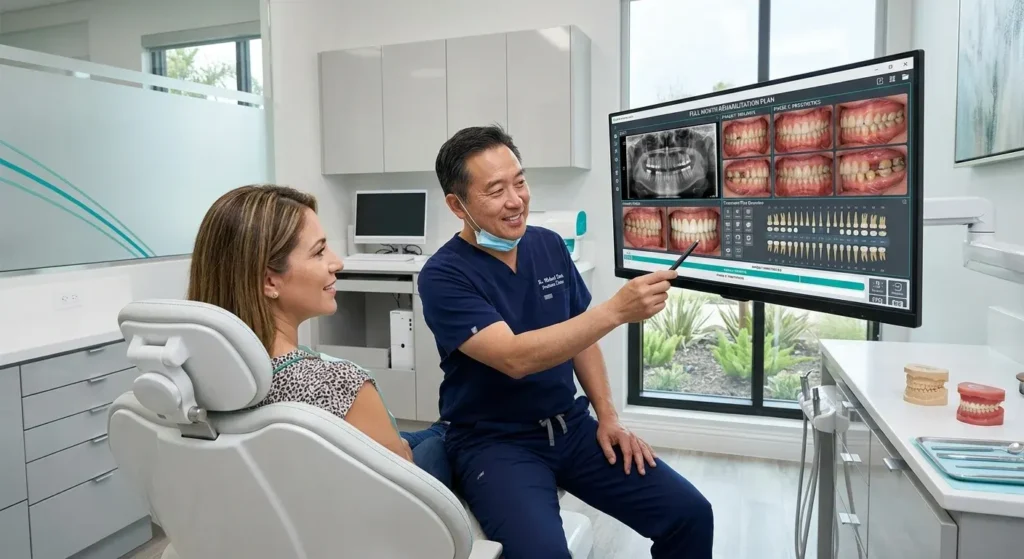
Full mouth rehabilitation is a comprehensive dental treatment approach used when multiple areas of the mouth need restoration or replacement.
It isn’t one specific procedure.
Instead, it can involve several dental treatments planned together. Depending on your condition, treatment may include:
- Dental fillings
- Dental crowns
- Dental bridges
- Dental implants
- Dentures
- Root canal therapy
- Tooth extractions
- Periodontal treatment
- Gum procedures
- Bite correction
- Tooth replacement
- Treatment for severe tooth wear
- Cosmetic restorative procedures
- Orthodontic treatment when appropriate
The exact combination depends on the condition of your teeth, gums, supporting structures, and bite.
The American College of Prosthodontists explains that comprehensive mouth reconstruction can involve crowns, bridges, veneers, implants, dentures, onlays, and other treatments depending on the patient’s needs.
Full Mouth Rehabilitation vs Full Mouth Reconstruction
These terms are often used interchangeably in dentistry.
There can be a subtle difference in how dental practices use them.
Full mouth reconstruction often emphasizes rebuilding or replacing severely damaged or missing teeth.
Full mouth rehabilitation places additional emphasis on restoring the overall function of the mouth, including the relationship between teeth, bite, supporting tissues, and oral function.
In practice, both may involve extensive restorative treatment.
For your website, I recommend keeping this page focused on the rehabilitation process and functional restoration, while your existing Full Mouth Reconstruction page focuses more heavily on rebuilding severely damaged or missing teeth.
This distinction helps reduce keyword cannibalization.
Who May Need Full Mouth Rehabilitation?
Full mouth rehabilitation may be considered when multiple dental problems affect a person’s ability to maintain comfortable and functional oral health.
You may benefit from a comprehensive evaluation if you have:
Severely Worn Teeth
Years of grinding, clenching, erosion, or other forms of tooth wear can gradually change tooth shape and function.
Severe tooth surface loss can also affect the way the upper and lower teeth meet. PubMed Central (PMC)
Multiple Broken or Damaged Teeth
Several fractured, cracked, or heavily restored teeth may require coordinated treatment rather than isolated repairs.
Multiple Missing Teeth
Missing teeth can affect chewing and may change how remaining teeth carry biting forces.
Depending on your situation, replacement options can include bridges, dentures, or dental implants.
Failing Dental Work
Old crowns, bridges, fillings, or other restorations may eventually need repair or replacement.
A comprehensive plan can determine which restorations can be preserved and which need replacement.
Significant Tooth Decay
Extensive decay affecting multiple teeth can require several restorative procedures.
The treatment sequence should prioritize controlling disease before completing definitive restorations.
Bite Changes
Extensive tooth wear or tooth loss can change how the teeth come together.
A comprehensive rehabilitation plan may evaluate the bite before restorative treatment begins.
Long Term Dental Problems
Some people have several dental concerns that have developed gradually over many years.
A comprehensive approach can help organize treatment into manageable phases.
Common Problems Addressed With Full Mouth Rehabilitation
Full mouth rehabilitation can address several interconnected problems.
Tooth Wear
Tooth wear may result from different factors, including grinding, erosion, abrasion, or normal aging.
When significant tooth structure has been lost, restorative treatment may be considered to rebuild damaged surfaces.
The cause of the wear should also be investigated.
Otherwise, the same forces that caused the original damage may continue affecting the new restorations.
Multiple Missing Teeth
Missing teeth can make chewing more difficult and may affect the distribution of forces throughout the mouth.
Depending on the patient’s condition, treatment may involve dental implants, bridges, partial dentures, complete dentures, or implant supported restorations.
Broken Teeth
Multiple fractured teeth may require a combination of fillings, crowns, root canal treatment, or extraction and replacement.
Failing Restorations
Older restorations can develop recurrent decay, fractures, wear, poor fit, or other complications.
A comprehensive examination helps determine which restorations can remain and which should be replaced.
Gum Disease
Healthy gums are important when planning extensive restorative treatment.
Active periodontal disease may need to be addressed before definitive restorative work is completed.
Bite Problems
Your bite affects how your teeth contact one another during chewing.
When extensive restorative treatment is planned, the bite becomes an important part of the overall treatment strategy.
What Treatments Can Be Part of Full Mouth Rehabilitation?
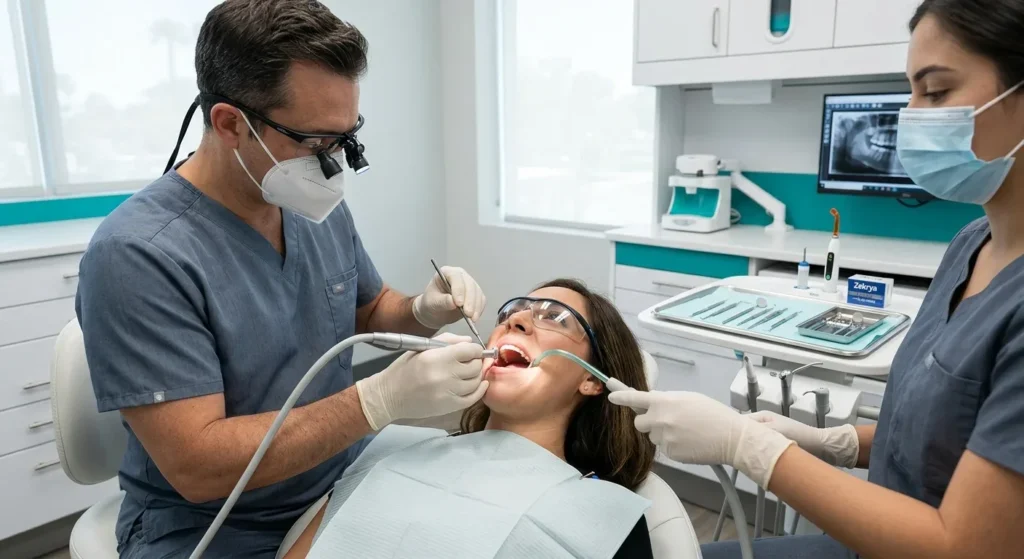
There isn’t a standard treatment package.
Your plan is customized according to your dental condition.
Dental Crowns
Crowns can restore teeth that have lost substantial structure or require additional protection.
Dental Fillings
Fillings may restore teeth with smaller areas of decay or damage.
Root Canal Therapy
A tooth with infected or irreversibly damaged pulp may require root canal treatment before it can be restored.
Dental Implants
Implants may replace missing teeth and support crowns, bridges, or implant supported prostheses.
Dental Bridges
Bridges can replace one or more missing teeth using neighboring teeth or implants for support.
Dentures
Partial or complete dentures may be appropriate when multiple teeth are missing.
Periodontal Treatment
Gum disease treatment may be required before or during comprehensive restorative care.
Tooth Extractions
A severely damaged or nonrestorable tooth may need extraction before replacement.
Cosmetic Dentistry
Some rehabilitation plans also include cosmetic treatments when appearance is an important part of the overall treatment objective.
The American College of Prosthodontists notes that comprehensive reconstruction may combine restorative, replacement, and cosmetic treatments to improve both oral function and appearance.
Why Bite Evaluation Matters
One of the important differences between treating isolated teeth and planning extensive rehabilitation is the relationship between the upper and lower teeth.
Your dentist may evaluate:
- How your teeth contact
- How your jaw closes
- Areas of excessive tooth wear
- Signs of grinding or clenching
- Missing tooth spaces
- Existing restorations
- Tooth position
- Chewing function
- The condition of supporting tissues
Extensive tooth wear can sometimes be associated with changes in the vertical dimension of the bite. Full mouth rehabilitation may therefore involve careful planning of tooth shape, position, and occlusion. PubMed Central (PMC)
This doesn’t mean every patient needs their bite completely changed.
Treatment should be based on the individual clinical findings.
Full Mouth Rehabilitation Treatment Process
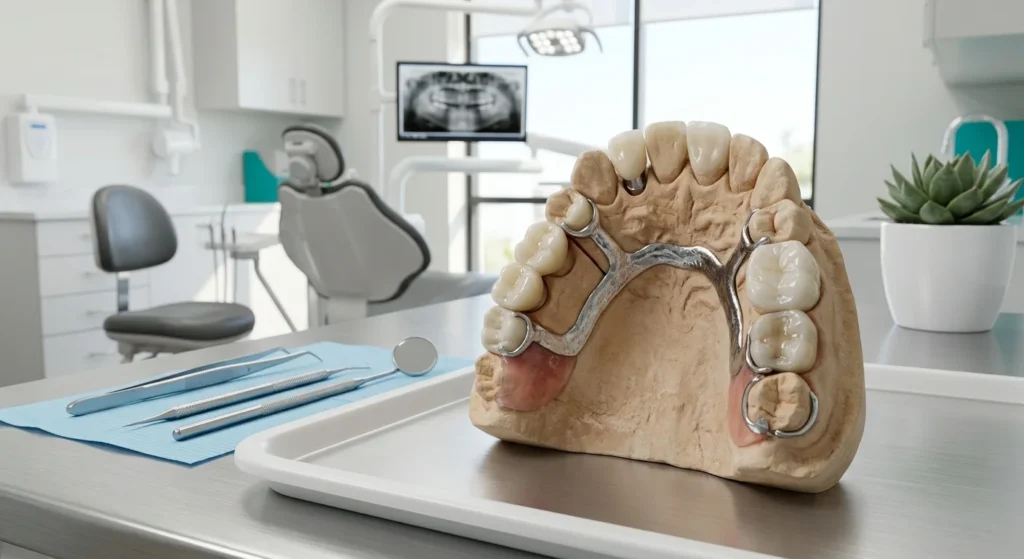
A comprehensive rehabilitation usually begins with diagnosis and planning rather than immediately performing restorative procedures.
1. Comprehensive Dental Examination
The dentist evaluates your teeth, gums, existing restorations, bite, and overall oral condition.
Your symptoms and treatment goals are also discussed.
2. Diagnostic Records
Depending on the case, diagnostic records may include dental X rays, photographs, digital scans, impressions, periodontal measurements, and other records.
The exact records depend on the complexity of the treatment.
3. Identify Existing Problems
The dentist determines which teeth are:
- Healthy
- Restorable
- Questionable
- Severely damaged
- Missing
- Infected
- Affected by gum disease
- Requiring replacement
4. Establish Treatment Priorities
Disease control normally comes before final cosmetic or restorative work.
For example, active infection or significant periodontal disease may need attention before definitive restorations are completed.
5. Develop the Treatment Sequence
Your treatment may be divided into several phases.
A typical sequence can involve:
Disease control → periodontal treatment → necessary extractions or root canal treatment → temporary restorations → tooth replacement → definitive restorations → maintenance
Not every patient requires every stage.
6. Temporary or Provisional Treatment
Some complex cases may use temporary restorations while the dentist evaluates function, comfort, appearance, or the planned bite.
7. Definitive Restoration
Once the mouth is ready, permanent restorations can be completed according to the treatment plan.
8. Maintenance
Long term maintenance is an important part of extensive dental rehabilitation.
Regular examinations, professional cleanings, daily oral hygiene, and protection against excessive forces can help maintain the results.
How Long Does Full Mouth Rehabilitation Take?
There isn’t one standard timeline.
Treatment duration depends on:
- Number of teeth involved
- Severity of tooth damage
- Gum health
- Presence of infection
- Need for extractions
- Need for root canal therapy
- Number of missing teeth
- Implant requirements
- Bone healing
- Temporary restorations
- Orthodontic requirements
- Laboratory fabrication
- Overall treatment sequence
Some cases may involve several appointments over a relatively short period.
More complex cases can take considerably longer, particularly when healing or implant treatment is involved.
A personalized treatment timeline should be provided after the examination.
Is Full Mouth Rehabilitation Painful?
The treatment experience depends on the procedures involved.
A simple restorative procedure may cause little discomfort.
More involved procedures, such as extractions, periodontal surgery, or implant placement, have different recovery requirements.
Local anesthesia is commonly used for procedures where appropriate.
Your dentist should explain what to expect before each stage of treatment and provide appropriate aftercare instructions.
Full Mouth Rehabilitation for Severe Tooth Wear
Severe tooth wear is one reason a patient may require comprehensive rehabilitation.
Tooth wear can have several causes.
These can include:
- Bruxism
- Acid erosion
- Abrasion
- Attrition
- Dietary factors
- Certain oral habits
- Other dental or medical factors
Treatment shouldn’t simply cover worn teeth without considering why the wear occurred.
Your dentist may evaluate the pattern and severity of wear before recommending restorative treatment.
For some patients, protecting the restored teeth from continued excessive forces may also be important.
Full Mouth Rehabilitation and Dental Implants
Dental implants can be part of a comprehensive rehabilitation when teeth are missing or cannot be preserved.
However, implants aren’t automatically required for every full mouth rehabilitation case.
Depending on the situation, missing teeth may be replaced with:
- Dental implants
- Implant supported bridges
- Implant supported dentures
- Conventional bridges
- Partial dentures
- Complete dentures
When implants are being considered, treatment planning may include evaluation of bone, gums, implant position, and the final restoration. Contemporary implant rehabilitation can involve distinct planning, surgical, and prosthetic phases.
Can Full Mouth Rehabilitation Improve Your Smile?
Yes, appearance can be part of the treatment plan.
However, full mouth rehabilitation shouldn’t be treated as simply a cosmetic makeover.
The primary consideration is the health and function of the mouth.
Depending on your needs, treatment may improve:
- Damaged tooth appearance
- Tooth shape
- Missing tooth spaces
- Uneven restorations
- Tooth proportions
- Smile symmetry
- Overall dental appearance
Cosmetic goals should be balanced with oral health and functional requirements.
Full Mouth Rehabilitation for Patients With Dental Anxiety
Extensive treatment can feel overwhelming.
Breaking treatment into phases can make a complex plan easier to understand.
During consultation, ask the dental team to explain:
- What needs treatment now
- What can wait
- Which teeth can be saved
- Which teeth need replacement
- How many appointments may be needed
- What each stage involves
- What alternatives are available
- How much each phase may cost
Understanding the sequence can make a complicated treatment plan feel more manageable.
How Much Does Full Mouth Rehabilitation Cost in Pico Rivera?
There isn’t a reliable single price for full mouth rehabilitation.
The cost can vary substantially because rehabilitation may combine several different procedures.
Factors can include:
- Number of teeth treated
- Crowns and restorations required
- Root canal treatment
- Extractions
- Dental implants
- Bone grafting
- Periodontal treatment
- Dentures or bridges
- Temporary restorations
- Laboratory fees
- Number of treatment phases
A patient requiring several crowns will have a very different treatment cost from someone requiring extractions, implants, periodontal treatment, and full arch prosthetics.
The most useful way to determine cost is through a comprehensive examination and written treatment plan.
What Makes Full Mouth Rehabilitation Different From Regular Restorative Dentistry?
Regular restorative dentistry may involve treating one or several individual teeth.
Full mouth rehabilitation takes a broader view.
The dentist considers how the treatments interact with one another.
For example, replacing one missing tooth may affect the position and function of surrounding teeth.
Likewise, restoring multiple worn teeth requires attention to how the restorations contact each other.
The objective is to create a coordinated treatment plan instead of treating unrelated problems independently.
What Should You Expect During Your Consultation?

Your consultation is an opportunity to understand your complete oral condition.
You may discuss:
- Your main concerns
- Dental pain or sensitivity
- Missing teeth
- Existing restorations
- Chewing difficulties
- Tooth wear
- Grinding or clenching
- Gum problems
- Cosmetic concerns
- Previous dental treatment
- Desired treatment priorities
The dentist can then explain the findings and discuss appropriate treatment options.
You don’t necessarily need to complete every treatment at once.
A phased plan may make sense depending on your oral health, priorities, and budget.
Benefits of a Comprehensive Approach
A coordinated rehabilitation plan can help your dental team:
Address Multiple Problems Together
Several related problems can be considered as part of one overall plan.
Prioritize Oral Health
Infection, decay, and periodontal problems can be addressed before definitive restorations.
Consider Function
Chewing and bite relationships can be evaluated alongside appearance.
Coordinate Different Procedures
Crowns, implants, periodontal care, root canal therapy, and tooth replacement can be sequenced appropriately.
Create a Long Term Maintenance Strategy
The plan can include preventive care after treatment is completed.
Full mouth rehabilitation is therefore more than simply placing many restorations. It is a coordinated process designed around the condition and needs of the entire mouth.
When Should You Consider Full Mouth Rehabilitation?
Consider asking about comprehensive rehabilitation if you have several of these concerns at the same time:
- Multiple missing teeth
- Numerous damaged teeth
- Severe tooth wear
- Repeated dental repairs
- Multiple failing crowns or fillings
- Difficulty chewing
- Significant bite changes
- Extensive tooth decay
- Advanced periodontal problems
- Multiple teeth requiring treatment
- Long standing dental problems
You don’t have to determine whether you need full mouth rehabilitation yourself.
A comprehensive examination can determine whether a coordinated approach is appropriate.