
Partial Dentures in Pico Rivera, CA
- Artificial teeth that replace the missing teeth
- A gum colored base
- A framework that provides support
- Clasps or other attachments that help hold the appliance in place
Replace Missing Teeth and Restore Your Everyday Smile
Missing teeth can affect much more than your appearance. You may avoid certain foods, speak less confidently, or feel uncomfortable smiling in photos. Even one missing tooth can change how you chew and place extra pressure on nearby teeth.
Partial dentures offer a practical way to replace several missing teeth while keeping your remaining natural teeth. They are removable dental appliances designed to restore function, improve appearance, and help fill the spaces left by tooth loss.
At our dental office in Pico Rivera, CA, we evaluate your teeth, gums, bite, and overall oral health before recommending a tooth replacement option. A partial denture may be suitable when you still have healthy natural teeth that can help support the appliance.
The right design depends on the number of missing teeth, their location, the condition of your remaining teeth, your gum health, and your personal preferences. Some patients may also benefit from a dental bridge or dental implants. Our goal is to help you understand each option and choose a solution that fits your needs.
What Are Partial Dentures?

A partial denture replaces one or more missing teeth when some natural teeth remain. Unlike a complete denture, which replaces an entire upper or lower arch, a partial denture fills selected spaces in your smile.
Most removable partial dentures include:
- Artificial teeth that replace the missing teeth
- A gum colored base
- A framework that provides support
- Clasps or other attachments that help hold the appliance in place
The appliance rests on the gums and may connect to nearby natural teeth. Depending on the design, a partial denture may use a metal framework, acrylic base, flexible material, or a combination of materials.
Partial dentures can help you:
- Chew a wider range of foods
- Speak more clearly
- Restore the appearance of your smile
- Prevent nearby teeth from drifting into open spaces
- Support a more balanced bite
- Feel more comfortable in social situations
Partial dentures do not permanently replace the natural tooth root. They also require regular cleaning and professional follow-up. Your dentist will explain how to care for the appliance and protect the teeth that support it.
Who May Need Partial Dentures?
Partial dentures may be an option for adults who have lost teeth because of:
- Tooth decay
- Gum disease
- Dental trauma
- Failed dental restorations
- Congenitally missing teeth
- Tooth extraction
- Age-related tooth loss
You may be a candidate if you have enough healthy teeth to support the appliance. Your gums and jawbone also need evaluation because these tissues affect comfort, stability, and long-term success.
A partial denture may be especially useful when:
- You are missing several teeth in different areas
- You want a removable replacement
- You need a more affordable option than implants
- You are not ready for implant treatment
- You need a temporary tooth replacement during healing
- Your remaining teeth can support a removable appliance
However, partial dentures are not the best choice for everyone. Active gum disease, severe tooth decay, weak supporting teeth, or poor denture fit may need attention before treatment begins.
Types of Partial Dentures
Acrylic Partial Dentures
Acrylic partial dentures use a plastic base and artificial teeth. They may be used as a temporary replacement or as a lower-cost removable option.
An acrylic partial denture may be helpful after extractions while your mouth heals. It may also be useful when you need a replacement quickly. However, acrylic appliances can feel bulkier than some other designs.
Metal Framework Partial Dentures
Metal framework partial dentures use a stronger framework to support the artificial teeth. They are often thinner and more stable than many acrylic designs.
The framework may include clasps that connect to selected natural teeth. Your dentist will evaluate the visibility, strength, and comfort of each possible design before recommending it.
Flexible Partial Dentures
Flexible partial dentures use a flexible material that may blend with the gums. They can provide a comfortable appearance for some patients.
These appliances may not be suitable for every bite or every pattern of tooth loss. They can also be more difficult to adjust or repair than certain traditional designs.
Implant-Supported Partial Dentures
Some partial dentures receive support from dental implants. Implants can improve stability and reduce movement during chewing.
This option requires a separate evaluation of your bone volume, gum health, medical history, and treatment goals. Implant-supported dentures may provide a more secure fit, but they usually involve more treatment time and a higher overall cost.
Partial Dentures Compared With Other Tooth Replacement Options
Partial Dentures and Dental Bridges
A dental bridge is fixed in place and usually connects to neighboring teeth or dental implants. A partial denture is removable.
A bridge may be useful when one or more missing teeth are located in a suitable area with strong supporting teeth. A partial denture may be more practical when several teeth are missing in different locations.
Partial Dentures and Dental Implants
Dental implants replace missing tooth roots and can support crowns, bridges, or dentures. They may offer strong stability and help preserve the jawbone, but treatment can involve surgery, healing time, and additional procedures.
Partial dentures may be a better fit for patients who prefer a removable option or who need to control treatment costs.
Partial Dentures and Complete Dentures
Complete dentures replace all teeth in the upper or lower arch. Partial dentures replace selected missing teeth while natural teeth remain.
Your dentist will recommend the most suitable option after examining your remaining teeth and supporting tissues.
What Happens During a Partial Denture Consultation?
Your first appointment begins with a discussion about your concerns and goals. We may ask about chewing difficulty, speech changes, appearance concerns, denture history, and previous dental treatment.
A complete evaluation may include:
- Examination of your remaining teeth
- Evaluation of your gums and supporting bone
- Assessment of your bite
- Dental X-rays when needed
- Review of your medical and dental history
- Discussion of removable and fixed options
- Review of expected costs and treatment steps
Your dentist may need to treat cavities, gum disease, damaged teeth, or infection before making the partial denture. This preparation helps create a healthier foundation for your new appliance.
How Partial Dentures Are Made
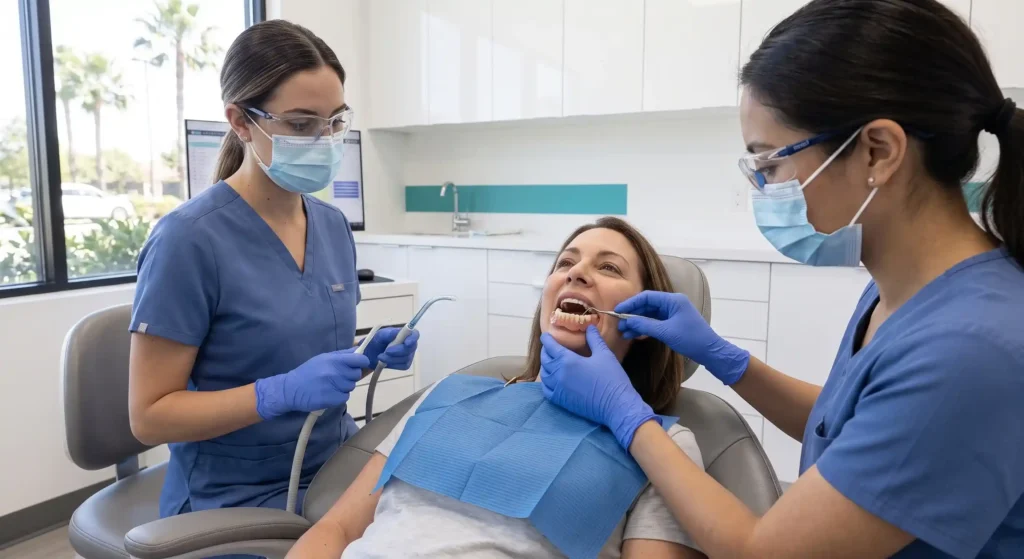
The exact process depends on the type of partial denture selected. Most treatment plans include several stages.
Oral Examination and Planning
Your dentist examines your mouth and identifies the teeth that can support the appliance. The design must fit your bite and avoid placing excessive pressure on weak teeth or sensitive gum tissue.
Impressions or Digital Scans
Traditional impressions or digital scans record the shape of your teeth and gums. This information helps the dental laboratory create an appliance that matches your mouth.
Bite Registration
A bite record helps the dental team understand how your upper and lower teeth meet. Proper bite alignment supports chewing comfort and helps reduce pressure on the remaining teeth.
Laboratory Fabrication
A dental laboratory creates the framework, base, and artificial teeth according to the treatment plan. The materials depend on the design, strength needs, appearance goals, and budget.
Trial Fitting
Some partial dentures require a trial fitting before completion. This step allows the dental team to check the tooth position, appearance, speech, and bite.
Final Fitting
During the final appointment, we place the partial denture and check for pressure points or movement. Minor adjustments may be needed as your mouth becomes accustomed to the appliance.
Adjusting to New Partial Dentures
A new partial denture may feel unfamiliar at first. You may notice changes in speech, saliva flow, chewing, or the way the appliance rests against your gums.
These changes often improve with practice. Start with soft foods cut into small pieces. Chew on both sides of your mouth when possible. Read aloud for a few minutes each day if speech feels different.
Contact our office if you experience:
- Persistent pain
- A sore spot that does not improve
- Significant movement during chewing
- Difficulty closing your mouth
- Repeated gagging
- Broken clasps
- Cracks in the base
- Changes in your bite
Do not file, bend, glue, or adjust the appliance yourself. An adjustment that seems small can change the fit and damage the denture or supporting teeth.
Caring for Your Partial Dentures
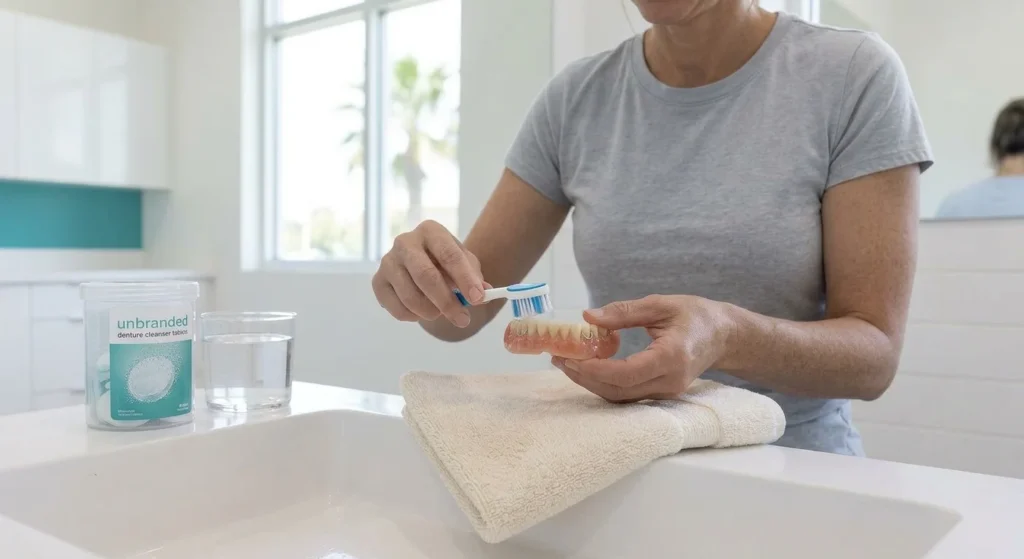
Partial dentures need daily care. Food particles, plaque, stains, and calculus can collect on the appliance just as they can on natural teeth.
Follow these care steps:
- Remove the partial denture before cleaning it
- Rinse it after meals when possible
- Brush it with a soft denture brush
- Use a nonabrasive denture cleanser
- Clean your natural teeth every morning and night
- Clean around clasps and supporting teeth carefully
- Brush your gums, tongue, and the roof of your mouth
- Store the appliance in cool water or an approved cleansing solution
- Follow the cleanser instructions
- Keep the appliance away from hot water
Hot water can warp some denture materials. Regular toothpaste may also scratch the appliance because it can be too abrasive.
The American Dental Association advises patients to keep dentures in water or an approved cleanser when they are not being worn. It also warns that denture adhesives should not be used to hide a poor fit. A loose or painful denture may need professional adjustment, relining, or replacement.
Protecting the Teeth That Support Your Partial Denture
Your remaining natural teeth are important. They help support the appliance and preserve your chewing function.
To protect these teeth:
- Brush twice each day with fluoride toothpaste
- Clean between teeth daily
- Follow your dentist’s cleaning recommendations
- Attend regular dental examinations
- Treat cavities early
- Manage gum disease promptly
- Avoid biting very hard objects
- Wear a mouth guard during contact sports
- Report loose teeth or bleeding gums
A partial denture does not prevent tooth decay or gum disease. In fact, poor cleaning around clasps can increase the risk of plaque buildup. Your dental team can show you how to clean these areas safely.
How Long Do Partial Dentures Last?
The lifespan of a partial denture varies. It depends on the material, design, daily care, changes in your mouth, and the condition of your supporting teeth.
A partial denture may need adjustment when:
- Your gums change shape
- Your jawbone gradually changes after tooth loss
- A supporting tooth becomes damaged
- The appliance begins to move
- You develop sore spots
- Your bite changes
- The denture becomes worn or stained
- A clasp breaks
- You lose another tooth
Some partial dentures may need relining, repair, or replacement over time. Regular examinations help identify problems before they become more serious.
Can Partial Dentures Improve Chewing?
Partial dentures can improve chewing by replacing missing teeth and distributing biting pressure more evenly. However, they may not feel exactly like natural teeth.
Begin with softer foods and avoid very sticky or hard foods while you adjust. Cut food into smaller pieces and chew slowly.
If the appliance moves during chewing, tell your dentist. Movement may indicate a design issue, a change in your gums, a problem with a supporting tooth, or the need for an adjustment.
Partial Denture Cost in Pico Rivera, CA
The cost of partial dentures varies from patient to patient. Factors may include:
- The number of missing teeth
- The location of the spaces
- The type of framework
- The materials used
- The need for extractions
- Gum disease treatment
- Tooth fillings or crowns
- Dental X-rays
- Implant placement
- Laboratory fees
- Adjustments and follow-up visits
- Dental insurance benefits
A basic acrylic appliance may cost less than a custom metal framework or implant-supported design. The lowest initial price may not always represent the best long-term value.
During your consultation, ask for a written estimate that explains the recommended design, included visits, possible additional treatment, and future maintenance needs.
Partial Dentures and Dental Insurance
Some dental insurance plans provide benefits for removable partial dentures. Coverage rules vary by plan and may include waiting periods, replacement limits, deductibles, or frequency restrictions.
Before treatment, contact your insurance provider and ask:
- Is a partial denture covered?
- Is there a waiting period?
- What percentage does the plan pay?
- Is a replacement covered?
- Are repairs covered?
- Is a specific laboratory required?
- Does the plan require preauthorization?
Our team can help you understand the estimate and discuss available payment options. Insurance coverage does not determine which treatment is clinically appropriate, but it can help you plan for the cost.
Why Choose Our Dental Office in Pico Rivera?
Choosing a partial denture provider involves more than selecting an appliance. You need a dental team that evaluates your remaining teeth, explains your choices, and follows up after delivery.
Our approach focuses on:
- A complete oral examination
- Clear explanations before treatment
- Careful evaluation of supporting teeth
- Attention to comfort and appearance
- A practical treatment plan
- Professional denture adjustments
- Guidance on cleaning and maintenance
- Coordination with restorative and implant services when needed
We do not recommend the same denture design for every patient. Your oral health, bite, lifestyle, and goals all matter.
Partial Dentures for Patients in Pico Rivera and Nearby Communities
Our office welcomes patients looking for partial dentures in Pico Rivera, CA, and nearby communities. Patients may visit us from:
- Pico Rivera
- Whittier
- Downey
- Montebello
- Santa Fe Springs
- Norwalk
- Bell Gardens
- South El Monte
- Commerce
- Los Angeles County communities
If missing teeth make eating or smiling difficult, schedule an evaluation. We can review your options and explain whether a partial denture, bridge, implant, or another treatment may be appropriate.
Frequently Asked Questions
Schedule a Partial Denture Consultation in Pico Rivera

Missing teeth can affect your comfort, confidence, and daily routine. A partial denture may help restore your smile while preserving the natural teeth you still have.
Schedule a consultation for partial dentures in Pico Rivera, CA. We will examine your oral health, discuss your choices, explain the expected process, and help you understand the next step.
Find more solutions for replacing several missing teeth on our Restorative Dentistry in Pico Rivera, CA page.