
Missing Teeth Replacement in Pico Rivera, CA
- Difficulty chewing certain foods
- Changes in speech
- Shifting of neighboring teeth
- Changes in how the upper and lower teeth come together
- Reduced support for surrounding teeth
- Changes in the bone around the missing tooth area
- Changes in smile appearance
Restore Your Smile, Bite, and Confidence
Missing one or more teeth can affect more than the appearance of your smile. Depending on which teeth are missing and how many teeth have been lost, tooth loss can also affect chewing, speech, and the way your remaining teeth fit together.
Over time, teeth adjacent to a space may shift, and changes can occur in the surrounding bone. Fortunately, several treatment options are available to replace missing teeth, including dental implants, dental bridges, partial dentures, and complete dentures. The most appropriate option depends on your oral health, the number and location of missing teeth, available bone and supporting teeth, and your personal treatment goals.
If you are looking for missing teeth replacement in Pico Rivera, CA, our dental team can evaluate your smile and discuss personalized options for restoring your teeth.
Why Should Missing Teeth Be Replaced?
Not every missing tooth creates the same challenges. A missing front tooth may have a significant effect on appearance and speech, while a missing back tooth may primarily affect chewing.
However, leaving a gap in the smile can sometimes lead to additional changes over time.
Potential concerns associated with missing teeth include:
- Difficulty chewing certain foods
- Changes in speech
- Shifting of neighboring teeth
- Changes in how the upper and lower teeth come together
- Reduced support for surrounding teeth
- Changes in the bone around the missing tooth area
- Changes in smile appearance
The right replacement option depends on the individual situation.
What Are My Options for Replacing Missing Teeth?
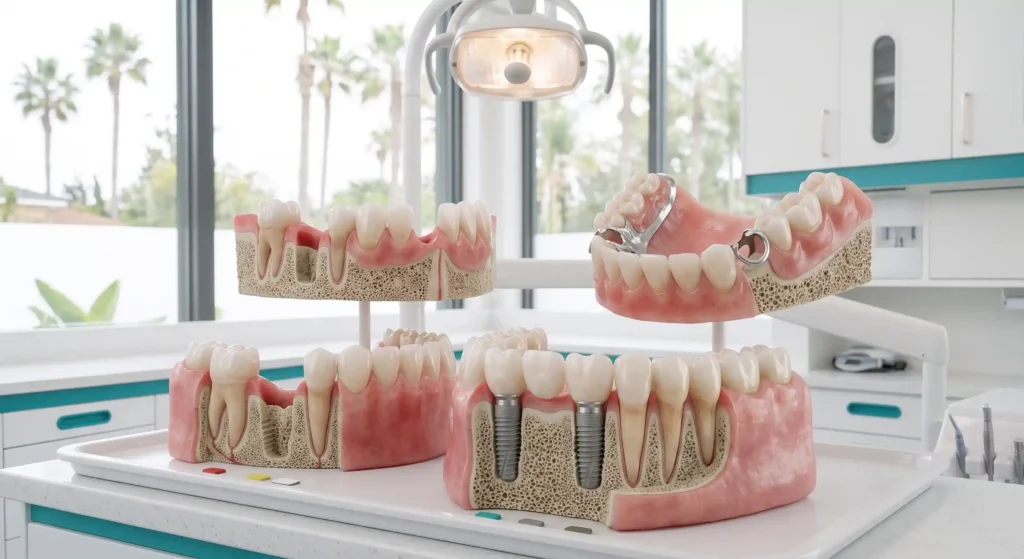
The primary options for replacing missing teeth include:
- Dental implants
- Dental bridges
- Partial dentures
- Complete dentures
- Implant-supported bridges
- Implant-supported dentures
- Full-mouth dental implant solutions
A dental examination and consultation can help determine which option is appropriate for your needs.
Dental Implants for Missing Teeth
A Replacement Option Designed to Replace the Tooth Root
A dental implant is surgically placed in the jawbone and serves as an artificial replacement for the root portion of a missing tooth. A replacement tooth, such as a dental crown, can then be attached to the implant.
Dental implants may be used to replace:
- One missing tooth
- Several missing teeth
- Multiple missing teeth
- An entire arch of teeth
The treatment process and suitability of implants depend on factors such as jawbone condition, oral health, healing ability, and the patient’s overall circumstances.
Replacing One Missing Tooth

When a single tooth is missing, treatment options may include a:
- Single dental implant with a crown
- Traditional dental bridge
- Removable partial denture in selected situations
A single-tooth dental implant is designed to replace both the missing tooth root and the visible portion of the tooth. A dental bridge replaces the visible missing tooth by spanning the gap and relying on support from neighboring teeth.
The best option depends on factors such as the condition of the neighboring teeth, the location of the missing tooth, bone availability, and the patient’s goals.
Dental Bridges for Missing Teeth
A dental bridge is a restoration designed to replace one or more missing teeth by spanning the space between existing teeth or other supporting structures.
Traditional bridges generally rely on support from neighboring teeth. Depending on the situation, bridges may be fixed or removable.
Dental bridges may be considered when:
- Suitable supporting teeth are present
- One or several adjacent teeth are missing
- A patient is not a candidate for an implant
- A patient prefers a non-implant treatment option
Dental Implants vs. Dental Bridges
Both dental implants and dental bridges can replace missing teeth, but they work differently.
| Dental Implants | Dental Bridges |
|---|---|
| Surgically placed in the jawbone | Supported by adjacent teeth or other supports |
| Can replace the tooth root | Primarily replaces the visible missing tooth space |
| May replace one or multiple teeth | Can replace one or several adjacent teeth |
| Requires sufficient bone or possible grafting | Requires appropriate supporting structures |
| Treatment timeline may take several months | Treatment timing varies by individual case |
Dental implants can provide support without relying on adjacent natural teeth, while bridges may be an appropriate option when neighboring teeth can provide support or when implant treatment is not suitable.
Partial Dentures for Missing Teeth
A partial denture is a removable dental prosthesis used when some natural teeth remain.
Partial dentures can replace multiple missing teeth and may be considered when:
- Several teeth are missing
- Missing teeth are located in different areas
- A removable solution is preferred
- Implant treatment is not appropriate
A removable prosthesis is designed so that the patient can remove and reinsert it after it has been fitted by a dental professional.
Complete Dentures for Extensive Tooth Loss
Complete dentures may be used when all teeth in the upper arch, lower arch, or both arches are missing.
Dentures can be:
- Conventional removable dentures
- Implant-retained dentures
- Implant-supported dentures
Factors considered when choosing among denture options can include the amount of bone available, the number of teeth being replaced, patient needs, and personal preferences.
Implant-Supported Bridges
When several teeth are missing in the same area, an implant-supported bridge may be an option.
Instead of depending on adjacent natural teeth for support, dental implants can support the replacement teeth.
This approach may be considered when multiple adjacent teeth are missing. Multiple-tooth implants can replace missing teeth without relying on adjacent natural teeth for support.
Implant-Supported Dentures
For patients missing most or all of their teeth, dental implants may be used to improve support and retention for a denture.
An implant-supported denture can provide a different type of support compared with a conventional removable denture.
The specific design depends on the number and location of implants, available bone, oral health, and the planned restoration.
Full Mouth Replacement Options

Patients who are missing all or most of their teeth may have several restorative options.
These can include:
- Complete dentures
- Implant-retained dentures
- Implant-supported dentures
- Full-mouth dental implants
- Fixed full-arch restorations
A consultation is necessary to evaluate the teeth, gums, jawbone, bite, and overall oral health before recommending a treatment approach.
Prosthodontic treatment can include restoring missing teeth with fixed or removable implant restorations and partial or complete dentures.
What Happens During a Missing Teeth Replacement Consultation?
A consultation for missing teeth replacement may include a comprehensive evaluation of your oral health and existing teeth.
Your dentist may assess:
- The number of missing teeth
- The location of missing teeth
- The health of remaining teeth
- The condition of the gums
- Your bite
- Jawbone support
- Existing crowns, bridges, or dentures
- Oral hygiene
- Your functional and cosmetic goals
Depending on the treatment being considered, digital imaging or additional diagnostic evaluation may be recommended.
Choosing the Right Tooth Replacement Option
There is no single replacement solution that is best for every patient.
Several factors may influence the treatment recommendation.
Number of Missing Teeth
Replacing one missing tooth is different from replacing several teeth or an entire arch.
For example:
- One missing tooth may be replaced with an implant and crown or a bridge.
- Several adjacent missing teeth may be replaced with an implant-supported bridge, traditional bridge, or partial denture.
- Extensive tooth loss may require dentures or implant-supported solutions.
Location of the Missing Teeth
The location of tooth loss can affect:
- Appearance
- Chewing function
- Speech
- Available treatment options
Front teeth may have different cosmetic requirements, while back teeth must withstand significant chewing forces.
Condition of Your Remaining Teeth
The health and strength of neighboring teeth can influence whether a traditional dental bridge is appropriate.
If supporting teeth are not suitable, an implant-based solution or removable option may be considered.
Jawbone Condition
Dental implants require appropriate support from the jawbone.
Some patients may need additional procedures, such as bone grafting, before or as part of implant treatment. The specific approach depends on the condition of the jawbone and the planned restoration.
Your Overall Oral Health
Healthy gums and appropriate management of existing dental problems are important when planning tooth replacement.
Conditions such as gum disease, untreated decay, or active infection may need to be addressed before certain restorative procedures.
Can You Replace Teeth That Have Been Missing for Years?
In many cases, yes.
However, the available treatment options may depend on changes that have occurred after tooth loss.
Your dentist may evaluate:
- The position of neighboring teeth
- Changes in the bite
- Available bone
- Gum health
- The amount of space available for replacement teeth
Even when teeth have been missing for a long time, several restorative options may still be available.
A personalized evaluation is the best way to determine what treatment may be appropriate.
Do Missing Teeth Cause Other Teeth to Shift?
Remaining teeth may shift toward a space over time.
Changes in tooth position can affect how teeth contact one another and may complicate future tooth replacement.
Missing teeth can also affect chewing, while bone loss may occur around a missing tooth area.
Can Missing Teeth Affect Your Bite?
Yes. Missing teeth can alter how chewing forces are distributed across the remaining teeth.
When teeth shift or when one side of the mouth is used differently for chewing, changes in bite function may occur.
A comprehensive examination can help determine whether tooth loss has affected your bite and what restoration options may help restore function.
How Long Does Missing Teeth Replacement Take?
The treatment timeline depends on the selected procedure.
Dental Bridges
The timeline depends on the type of bridge and the individual treatment plan.
Dentures
Dentures may require multiple appointments for impressions, fitting, adjustments, and delivery.
Dental Implants
Implant treatment may require several stages. Bone healing and integration with the implant can take time, and the full treatment process may take several months in some cases.
Your dentist can provide a more specific timeline after evaluating your oral health and treatment needs.
Benefits of Replacing Missing Teeth
Appropriate tooth replacement may help restore:
- Smile appearance
- Chewing ability
- Speech
- Bite function
- Comfort
- Confidence
Replacement options can also help maintain a more complete dental arch and reduce some of the functional challenges associated with missing teeth.
The specific benefits depend on the patient’s condition and the type of restoration selected.
Missing Teeth Replacement for One Tooth, Several Teeth, or a Full Arch
Our approach to tooth replacement begins with understanding your individual situation.
Whether you are missing:
- One tooth
- Several teeth
- Multiple adjacent teeth
- Teeth in different areas of the mouth
- Most of your teeth
- All teeth in one or both arches
A treatment plan can be developed based on your oral health, remaining teeth, bone support, functional needs, and treatment goals.
Missing Teeth Replacement in Pico Rivera, CA

Living with missing teeth can affect everyday activities such as eating, speaking, and smiling.
Modern dentistry offers several ways to replace missing teeth, from removable dentures and dental bridges to single dental implants and full-mouth implant solutions.
The first step is a professional consultation to determine which treatment options are appropriate for your individual needs.
If you are considering missing teeth replacement in Pico Rivera, CA, schedule a consultation to discuss your options for restoring your smile and oral function.
Frequently Asked Questions
Discover the full range of replacement solutions on our Restorative Dentistry in Pico Rivera, CA page.